Blackboard

September Support from TEL

As the first semester gets underway and new colleagues join the university, we thought it would be helpful to signpost where and how staff can access support from the Technology Enhanced Learning (TEL) Unit. Whether you’re exploring new digital tools or seeking guidance on best practices for online learning, we’re here to assist.

Online Support Resources

  • Our TEL Tools page provides an overview for staff of the main technologies used to support learning, teaching and assessment at the university.
  • Our Support Resources page links to a range of online guides, manuals and instructional videos for both staff and students. You will be able to find support for the Blackboard VLE (including Class Collaborate), Turnitin, PebblePad and Panopto. You can share suitable links from our student support pages with your students. For example, you can choose to include the most appropriate student resources within your module content: Adding Links

Our TEL Blog:

Staff members are welcome to subscribe to our Blog posts. These keep staff updated about recent changes to the VLE and its’ integrations and also provide handy hints or tips for using our suite of Learning Technologies. We have included some blog highlights below, from last year, which are helpful to refer to early on in a semester:

Additional help and training:

We run staff training sessions through the year. Our workshops are included in Staff Development / iTrent bookings. In addition, our team of Learning Technologists are available for departmental or small group training sessions for staff. So, if you or your colleagues have any Learning Technology training needs, please do get in touch. Also, if you have any questions or queries about the systems we manage, please contact us at TEL tel@worc.ac.uk.

September Support from TEL Read More »

New Recommended Panopto Assignment Process

We have listened carefully to feedback from both staff and students regarding Panopto assignment submissions, particularly around challenges with the submission process. In summary, the main issues raised are:

  • The submission process is not always straightforward, and some students struggle to complete it successfully.
  • The student experience varies across devices, with MacBook users finding the process particularly difficult and encountering limitations in available features.
  • The existence of multiple submission routes can create confusion.

In response, we have reviewed the situation and decided to standardise the recommended process so that all Panopto submissions follow one clear, simple workflow. This approach is designed to ensure consistency and ease of use for all students, regardless of the device they are using.

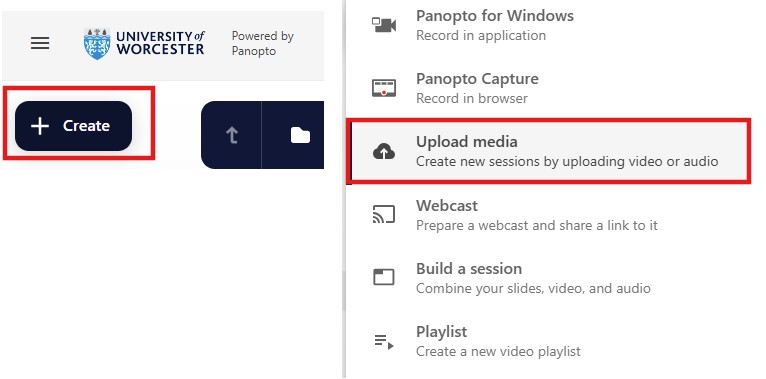
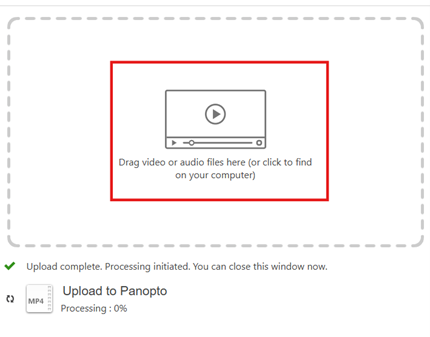
Going forward, we recommend that video submissions are created as a PowerPoint presentation with Cameo voiceover, saved as an MP4, and then uploaded to Panopto. This method is more straightforward and relies on familiar tools, making it far simpler than Panopto’s browser capture. PowerPoint is a tool that is available to all students as part of the free Office 365 subscription through the University. Should you as the course tutor wish to stipulate a different method of video creation, such as using Camtasia, this is your choice. The main point is that the video should be created first and then submitted.

While this workflow has always been an available option — particularly for students experiencing difficulties — some tutors have raised concerns about academic integrity. To address this, we consulted with the University’s Academic Integrity Tutors, who have confirmed that this process fully meets academic integrity requirements.

Please read the guidance on using Panopto with PowerPoint.

To set up a Panopto Video submission, please follow the guide. This part of the process will be unchanged from last year.

If you have any questions, please email me at a.bright@worc.ac.uk

Andrew Bright

Interim Head of Technology Enhanced Learning

New Recommended Panopto Assignment Process Read More »

Turnitin Originality Reports in Blackboard Assignments

It is now possible to generate Turnitin originality reports for standard Blackboard assignments. This allows staff and students to view originality matches directly within Blackboard while still using the standard Blackboard grading and feedback tools. (Turnitin Feedback Studio for grading is not currently supported). This may be useful if you would like to have one submission point for marking with Blackboard but need a Turnitin originality check, or track multiple attempts.

It is easy to enable this new functionality with your Blackboard assignments.

To do this, when setting up a new assignment, in the Additional Tools section, click the Enable Turnitin option:

'Enable Turnitin' option shown in red box, within the Blackboard menu options

The integration will load, and you can then toggle the Enable Turnitin switch to the On position.

'Enable Turnitin' sliding toggle button shown below Originality Report in the Assignment Settings.

Select your Turnitin options as usual. Choose the Standard Paper Repository for summative work, or Do not store the submitted papers for formative. Select sources to check, and select the Similarity Report options as needed. Finally, click the Save button to finalise these settings. You can always return to these settings to update later if required.

Originality Report Menu settings are shown - displaying the different tick box options which are available.

When you return to the Additional Tools section in the Assignment Settings, you should see that Turnitin has been enabled:

Image of 'Turnitin enabled' to show how this looks when turned on and the 'Save' button to apply the chosen Turnitin settings.

Once papers have been submitted and processing is complete, staff and students will be able to view the originality report by clicking on the originality percentage button:

An example of an assignment with the 'originality percentage button' highlighted in a box, in the top right-hand corner.

The Originality report will then load in a new tab using the updated Turnitin interface:

Example of an originality report using the updated Turnitin interface. The assignment appears on the left hand side. Then the 'sources' / similarity matches are in a column on the right hand side of the page. A 'filters' option is at the top of the sources list.

Turnitin Originality Reports in Blackboard Assignments Read More »

Knowledge Checks in Blackboard

Document on a computer screen showing two ticks and one cross next to lines of text - like a multiple choice quiz
Adobe stock by Belozersky

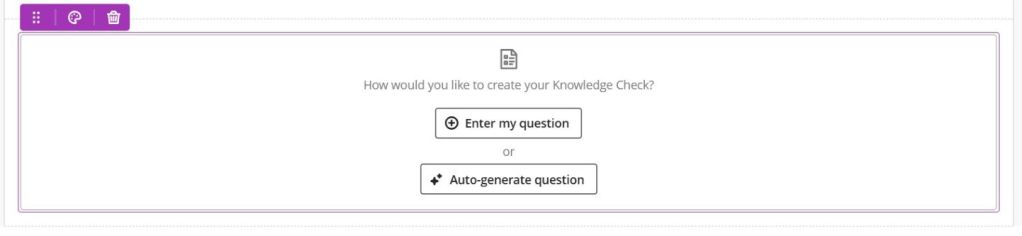
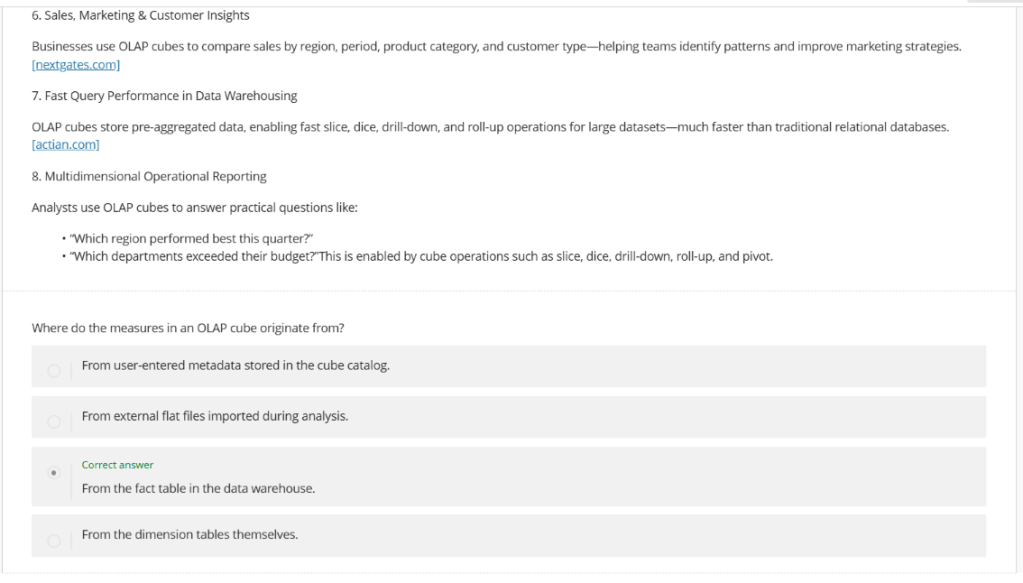
Knowledge checks are an element of interactive learning, which tutors can weave into their module content as an informal form of assessment, providing immediate feedback for students.

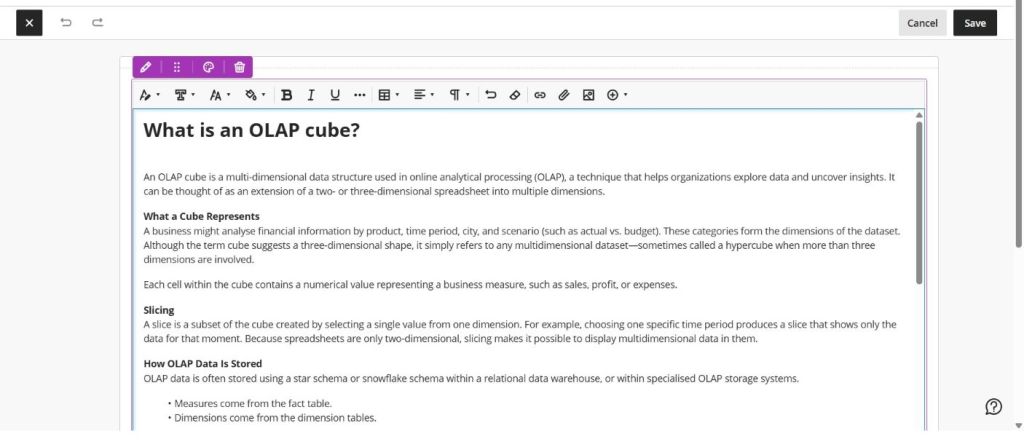
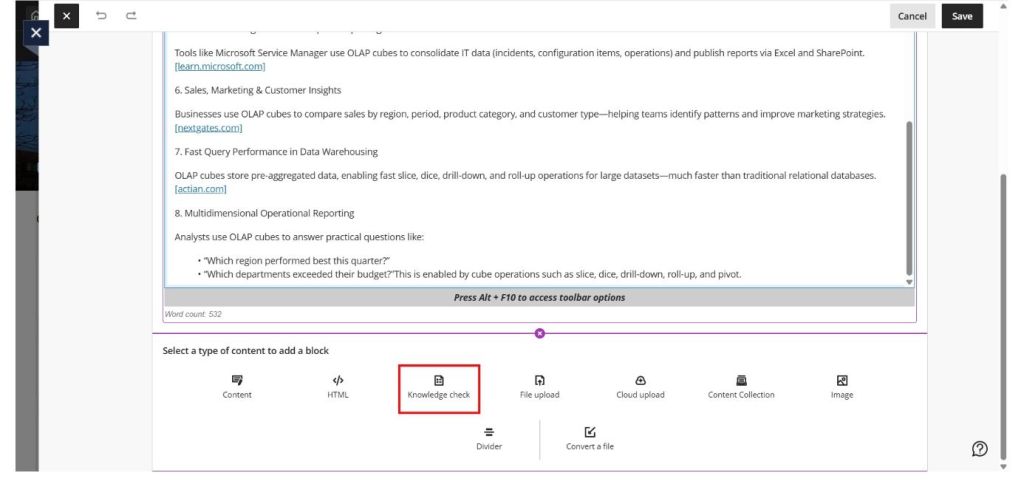
The knowledge check block can be included in a Blackboard document as an engagement tool. Tutors can pose multiple choice or multiple answer questions, and tailor their feedback for correct / incorrect answers. Knowledge checks permit unlimited attempts for students and lecturers will have access to useful metrics to review levels of understanding.

How are knowledge checks beneficial to learning?

Knowledge checks can be used:

  • To assist with students’ acquisition and retention of key knowledge.
  • To help students identify learning aspects which they need to delve into further.
  • To improve levels of engagement with module content.
  • As an approach to boost students’ confidence.

Multiple attempts are permitted for these brief informal quizzes, so this will hopefully reduce the pressure for students to get everything correct the first time. Academic staff can tailor the feedback for both correct and incorrect answers, this allows tutors to encourage their students and add additional clarification. Feedback can be used to reveal an explanation, to reduce the chance of common misconceptions forming.

How can I use the metrics?

Knowledge check metrics can be helpful for lecturers to determine any knowledge or understanding blind spots their students may have as a group. Results can be used to inform additional teaching activities, providing their students with the opportunity to tackle gaps in their knowledge. The metrics are only visible for tutors and give a general overview of question attempts. Unlike Blackboard tests, the results are not included in the Gradebook alongside names (so it is not possible to track individual interactions), but a summary is displayed in the original document for instructors, where the knowledge check quiz was added.

Where can I add knowledge checks within module contents?

These multiple-choice quizzes can be added to a document at any point within a module, allowing flexibility in approach. For example:

  • Knowledge checks could be used to reflect on pre-existing knowledge when starting off a new topic.
  • They can be included for students to engage with or review new information contained in the same document.
  • Provide a quick review or discussion prompt mid-way through a module.
  • Or as a short informal revision task, for students to check their levels of understanding at the end of the module for core concepts.

Please see our guidance about how to add Knowledge Checks here.

Blackboard also have useful information about the features of knowledge checks in their online guidance and video.

Knowledge Checks in Blackboard Read More »

Vevox is a Blackboard Integration

Vevox icon 'Audience Engagement' displayed on a mobile phone screen, which is being held in a hand.
© Vevox

We are pleased to announce that Vevox polling software is now integrated with our Blackboard VLE. This integration enables tutors to launch an interactive polling session using Vevox directly within their Blackboard course environment, streamlining the use of polls and enhancing the learner experience.

Users connect easily to Vevox via Blackboard without any need to sign in. Student identities remain hidden from public view, but student progress can be tracked via the Blackboard Gradebook by tutors. To add a Vevox poll or survey to your Blackboard course area, you can locate the Vevox tile in the ‘Content Market’.

Vevox have produced a help video and a step by step user guide showing how to link Vevox polls or surveys into your Blackboard course.

Vevox is a Blackboard Integration Read More »

Your 2025–26 Blackboard Modules Are Now Available

People viewing text in books and on laptops.

Adobe stock by alexdndz

Blackboard is now live for the 2025–26 academic year. If you’re someone who likes to get a head start, now is the perfect time to begin building and preparing your module content.

To access your new modules, all staff must enrol – even if you’re the module leader. Full guidance is available here: Enrolling on Modules.

Planning to reuse materials from last year? Please make sure you follow our content copying guidance, which you can find here: Copying Content.

User Manual, Guide Book or Technical Instruction Concept. Tiny Female Character Carry Huge Handbook with Guidance and Tutorial for Users. Customer Support, Aid. Cartoon People Vector Illustration
Adobe stock by Sergii Pavlovskyi

Did you know we’ve created a dedicated support site to help you get the most out of Blackboard Learn Ultra? The Blackboard Learn Ultra Manual covers everything from creating content and setting up assessments to using interactive tools and enhancing student engagement.

If you’d like any further support, please don’t hesitate to contact the TEL team at tel@worc.ac.uk We’re here to help!

Your 2025–26 Blackboard Modules Are Now Available Read More »

Reflections and Review – Blackboard Ultra Insights Week

Adobe stock by adrian_ilie825

The Technology Enhanced Learning Unit’s Blackboard Ultra Insights Week proved to be a resounding success, drawing in enthusiastic participation across all sessions. By shifting from a full-day in-person event to several shorter, focused online sessions spread throughout the week, the format offered a more accessible and flexible experience for attendees. We had some people who attended every session and others who dipped into those sessions that were especially relevant to their interests.

The sessions covered a range of topics around engagement and retention in Blackboard Ultra:

  • Integrating Reading Resources covered methods to help students engage with course readings, including a demonstration by Michelle Sterry of her use of reflective journals for students to record and receive feedback on their readings
  • Engagement and Analytics covered Helen Watts’ research into VLE engagement as an indicator of student outcomes and Helen Hope’s use of Blackboard analytics to facilitate student engagement.
  • Guided In-class Activities showcased Louise Martin’s innovative use of Blackboard functionality to build tasks for students to work through in a classroom setting. One attendee said it was “The most useful thing I have seen in ages!”
  • Building Fully Online Courses looked at Sarah Davis’s development of a fully online master’s-level course using a combination of Blackboard Ultra and MS Teams. Sarah’s approach would be an excellent blueprint for anyone considering adopting a distance-learning approach, so we highly recommend viewing the recording if this applies to you.

Recordings are now available on the LDTE CPD SharePoint site at the link below:

LDTE CPD – Home

Thanks again to Ros Sykes, Michelle Sterry, Helen Watts, Helen Hope, Louise Martin and Sarah Davis for presenting some fantastic sessions, and to everyone who attended.

Reflections and Review – Blackboard Ultra Insights Week Read More »

Blackboard Rubrics

Rubric Grid icon with ticks

You can now create no points rubrics for Blackboard Ultra assignments, just like you can for Turnitin.

Previously, Blackboard rubrics required each feedback item to have a points value or percentage associated with it, which was automatically added to the gradebook. This value needed to be overridden so that students would not see an incorrect grade.

When creating a new rubric, just choose the No points selection in the Rubric Type dropdown:

Formative Assignment 'No Points' selected in drop-down menu

Complete the rubric table and save your content. You can then apply the new rubric to any Blackboard assignment.

For detailed guidance on how to create a new rubric, or how to export an existing rubric from another Blackboard course area, access the Blackboard Manual.

Blackboard Rubrics Read More »

Blackboard Ultra Insights Week – Drop in Sessions

Group of People in an Online chat - displayed on a laptop screen

Adobe stock by Triative

As part of Blackboard Ultra Insights Week, the TEL team will be hosting some online drop-in sessions open to all staff. These will offer support and ideas on enhancing course engagement and interactivity, improving course structure, and copying content effectively for the new academic year. Come along and chat to us, bounce some ideas around or ask any questions that you may have.

Drop-in sessions:

Tuesday 20th May, 14:30pm -15:30

Link to join the session

Friday 23rd May, 10:00 – 11:00

Link to join the session

Additionally, as part of the week’s events, staff are invited to participate in a quick survey about Ultra – just three questions that will help us identify what tools are most useful to staff.

You can access the survey here.

Blackboard Ultra Insights Week – Drop in Sessions Read More »

Blackboard Ultra Insights Week

Red person-shaped wooden game piece in centre - with a network of other people shaped pieces around them.
Adobe stock by Monster Ztudio

The Technology Enhanced Learning Unit is celebrating the successful first year of the University using the new Blackboard Ultra VLE with a Blackboard Ultra Insights Week. Throughout the week, online presentations will be delivered by colleagues from academic faculties, Library Services, and the TEL team, showcasing innovative and effective uses of Blackboard Ultra. Sessions have been scheduled around lunchtime, offering a timely break and a chance to engage with something different during the marking period. The presentations will be recorded for those who are unable to attend.

In addition, the TEL team will host online drop-in sessions open to all—offering support and ideas on enhancing course engagement and interactivity, improving course structure, and copying content effectively for the new academic year.

There will also be an opportunity to take part in an online survey designed to gather insights into which areas and tools within the VLE staff find most valuable.

The itinerary for the week is as follows:

Staff Presentations:

Student Engagement with Module Readings

Monday 19th May, 11:00 – 12:00

Ros Sykes, Andrew Bright, Michelle Sterry

This session will explore strategies to boost student engagement with course literature and resources, focusing on practical techniques in Blackboard to encourage the use of your Talis resource lists.

VLE Engagement and Course Analytics

Tuesday 20th May, 12:00 – 12:45

Helen Watts, Helen Hope

This session will look at VLE engagement and student retention, and the practical use of Blackboard Ultra’s analytic tools.

Guided in-class Activities in Blackboard Ultra

Wednesday 21st May, 12:30 – 13:30

Louise Martin

In this session, Louise Martin will demonstrate how guided activities in Blackboard Ultra can be used to support in-class learning, showcasing interactive tasks she has designed to actively engage students and reinforce key concepts.

Developing Fully Online Courses

Thursday 22nd May, 12:00 – 13:00

Sarah Davis

In this session, Sarah Davis will share her experience of developing a fully online course using Blackboard. This session is ideal for anyone considering the design of fully online or highly blended courses—an area of growing strategic importance for the University.

Drop-in sessions:

  • Tuesday 20th May, 14:30 -15:30
  • Friday 23rd May, 10:00 – 11:00

Links for all presentations and drop-in sessions will be shared at a later date.

We hope that you will be able to take part!

Blackboard Ultra Insights Week Read More »